
Brave
I heard once that courage was not the absence of fear, but the triumph over it.

The first time I understood that quote was as a cadet. It was the first time I saw, first-hand, what destruction nature could unleash.
I could not sleep that week. The smell of smoke lingered through the warm, still nights. Fans did nothing but stir the air. Air conditioning would have been nice.
My dreams were filled with images from the news: flames licking and eating everything in their path, the sound of screaming as the fire leapt from ridge to ridge. And it had not even happened yet.
The weekend before, one of the crew and I had joked about the end of days and said we would need the Great Eastern Fire Break, the strait between New South Wales and New Zealand. We were not laughing the next weekend.
It was January 1994.
We called it January 94, the 41F. That number came from the Bush Fires Act. Section 41F meant a state of emergency.
Even now, more than thirty years later, I remember it all too clearly.
Bravery, though, belonged to the few. The ones who patrolled through the night, searching for trunks still burning deep within, embers that had to be extinguished before dawn.
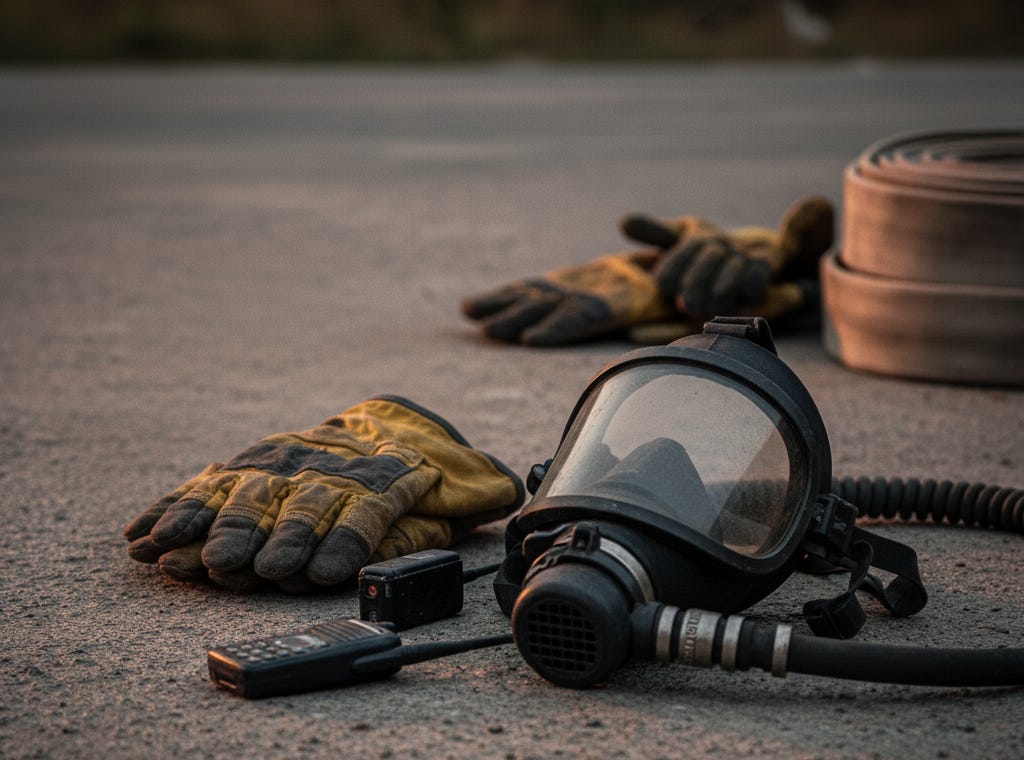
But bravery, to me, looked like two firefighters I deeply respected. Without hesitation, they grabbed their BA sets, their Breathing Apparatus, and disappeared into a street lined with houses that stood directly in the fire’s path.
It took a while before anyone realised they were missing. They were both officers, so when their crew requested replacements, that was when the search began.
All we had heard was that there were people trapped in a pool. From what I remember, they had jumped in without a second thought, shielding two burned children and staying with them until help arrived.
Later, I saw them bringing in their equipment for replacement: pager, mobile, radio, all waterlogged. I remember the way they told their story, modest and casual, as if it were just another shift.
And I remember the quote echoing in my head, Nelson Mandela’s words about courage and fear.
If you had asked those two if they were brave, they would have scoffed, leaning back and telling another story from their time on the front line of two different fire services.
I had known them since I was a kid. I looked up at them with awe. What they had done that day. What they had risked without hesitation.
There were other stories too. Crews kicking through doors to clear houses. A living room lined with newspapers that went up like kindling. Single-lane roads jammed with trucks fighting to save whatever they could, sometimes property, sometimes just lives. Hoses left behind as crews retreated, the fire snapping at their heels.
I clear my throat when I tell the story now.
“I was just a cadet,” I say. “Not even sixteen. I remember hearing the crackle of the radio as it died. And then, minutes later, it came back. The crews in the field never even knew we had been offline.”
These days, I tell that story to teenagers who have never felt that kind of heat or fear. I want them to understand the courage it takes to stay when every instinct says to run. And I hope they never have to find out for themselves.
Written for National Novel Month, 2025.